Weeki Wachee Springs Protection Zone: What Boaters and Paddlers Need to Know Before You Hit the River
By Hernando Beacon · June 11, 2026 · 4 min read
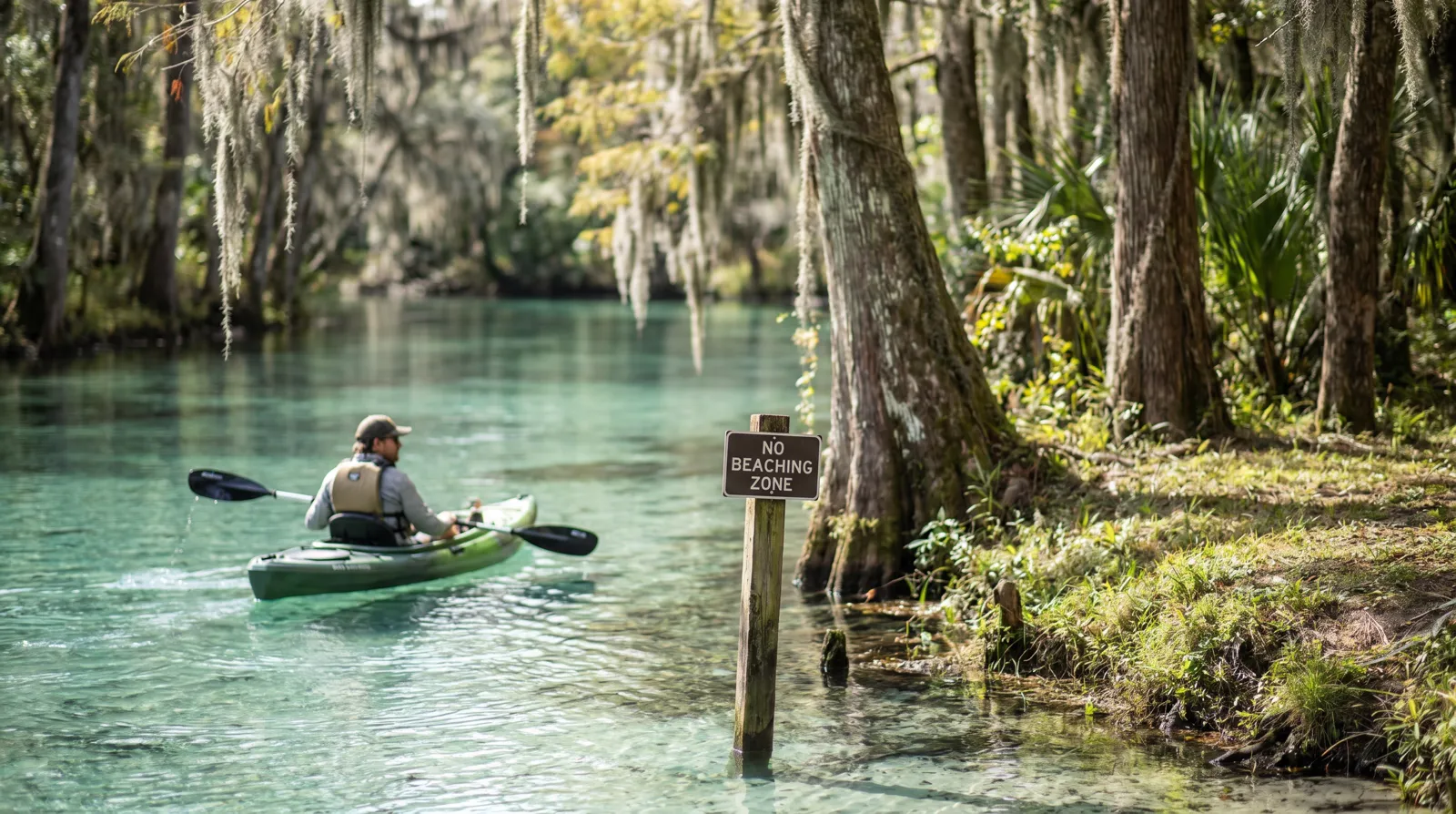
If you’ve paddled the Weeki Wachee in the last two years, you may have noticed the sandbars you used to pull onto for a swim now carry a warning. Since enforcement began around May 2024, the stretch of river from Rogers Park Boat Ramp to the headsprings at Weeki Wachee Springs State Park — 5.61 miles in all — has been a Springs Protection Zone. Inside it, you cannot anchor, moor, beach, or ground a vessel. That applies to kayaks, paddleboards, canoes, and motorboats alike, and breaking the rule runs $140 a pop.
The rule exists for a concrete reason. Years of visitors dragging boats onto the sandbars between Rogers Park and the state park trampled the submerged aquatic vegetation that holds the river system together. The Florida Fish and Wildlife Conservation Commission approved the zone in July 2023 to give that vegetation a chance to recover. Below is what the rule actually means for your day on the water — and the one thing that could undo it.
Can I still tube the Weeki Wachee?
Yes. This is the single most common point of confusion, and the answer comes down to a technicality in Florida law: tubes and rafts are not classified as vessels. The no-beaching, no-anchoring rule only applies to vessels, so swimming, snorkeling, and tubing inside the protection zone are all still permitted.
That said, the rule of the river and the rule of the rental shop are two different things. The Kayak Shack at Rogers Park — the only permitted kayak, canoe, and SUP rental operation there — bans inflatable tubes on its rental run regardless of state law. So if you’re floating on your own gear, you’re fine in the zone. If you’re renting, check the operator’s policy first.
Where does the no-beaching rule start and end?
The zone runs the full 5.61 miles between two clear landmarks:
- Downstream end: Rogers Park Boat Ramp in Weeki Wachee
- Upstream end: the headsprings inside Weeki Wachee Springs State Park
Everything in between is protected. The practical version: you can paddle the whole river, but you can’t stop by pulling your boat onto land or the sandbars anywhere along that span. If you want to get out and swim, do it without grounding the boat — and remember that beaching to take a dip is exactly the scenario the $140 fine was written for. Hernando County Sheriff’s Office deputies and FWC officers both enforce the zone.
Can I launch my own kayak at Rogers Park?
You can launch a private boat at the public Rogers Park Boat Ramp, but not from the Kayak Shack’s lot — they don’t allow private launches from their property. If you’re renting from them instead, plan around their schedule, which is buried in their fine print but matters a lot for first-timers:
- Launch window: 8 a.m. to 12 p.m. only
- All rentals back by: 5 p.m.
- No private kayak launches from the Kayak Shack lot
Miss the launch window and you’ve missed your paddle for the day. The river also runs one direction — most renters get shuttled and float down toward Rogers Park.
When are the manatees here?
The protection zone overlaps directly with a manatee warm-water refuge. Manatees concentrate at the headsprings end from late fall through early spring, drawn to the constant spring temperature when the Gulf cools off. If you’re paddling December through February, give them wide berth, keep your speed down, and don’t crowd the headsprings. The same vegetation the zone protects is part of what keeps that refuge viable.
Will the Boater Freedom Act get rid of the zone?
This is the open question, and it’s the one no Tampa station has fully answered for Hernando residents. On July 1, 2025, Gov. Ron DeSantis signed the Boater Freedom Act, SB 1388. The law raises the bar for restricting boater access — regulators now have to show a zone prevents “significant harm” and that boating is the “predominant cause” of that harm.
For the Weeki Wachee SPZ, that’s not a hypothetical. A Hernando resident has already stood up at an FWC meeting and called for the zone to be removed under the new standard. On the other side, the nonprofit Florida Springs Council — which advocated for the zone in the first place — is publicly defending it against rollback. FWC could be forced to re-justify the zone or dissolve it. For now, the rules remain in full effect and the fine is still $140. Anyone paddling this season should plan as though the zone stays exactly where it is.
Before you go
Double-check the current rules straight from the source: Hernando County maintains an explainer at hernandocounty.us, Weeki Wachee Springs State Park publishes boating FAQs at weekiwachee.com, and the Kayak Shack lists its own Rules of the River at weekiwacheekayakrental.com. If you’ve paddled the river recently and want to tell us what enforcement looks like on the water, drop the Beacon a line — we’re tracking how this plays out for our river.